
Why now
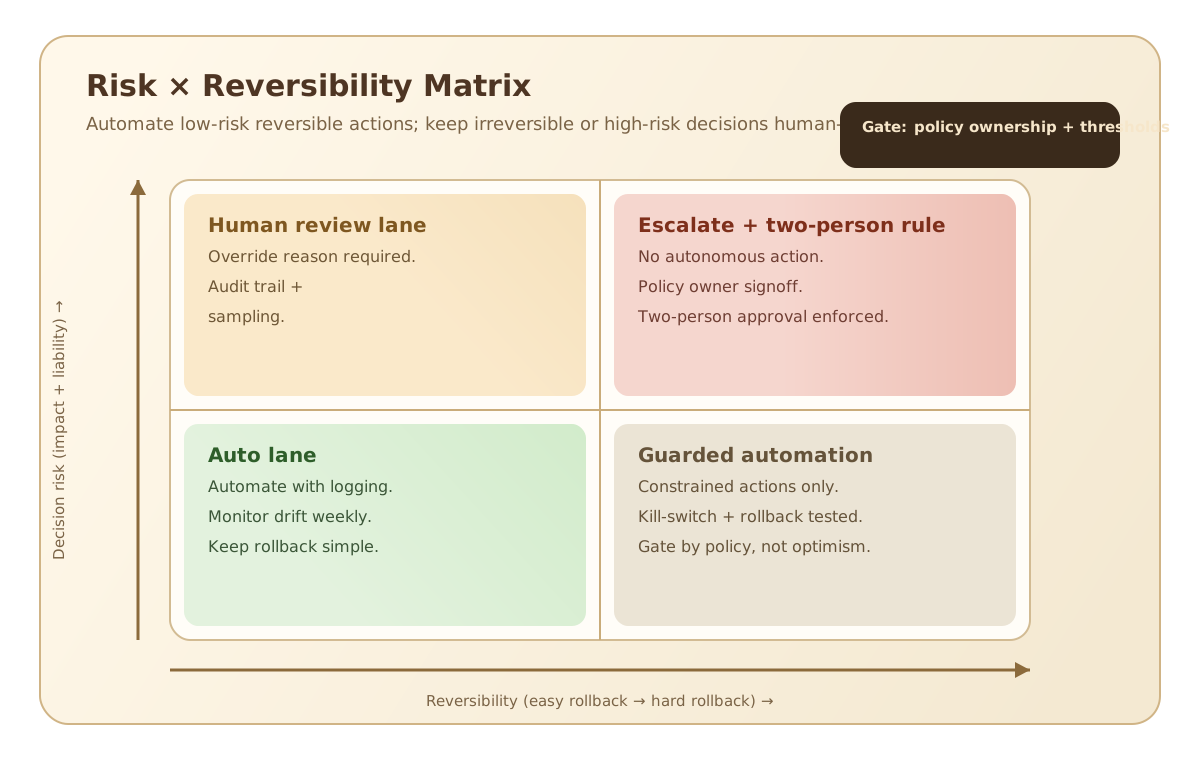
Set clear handoff rules: automate low-risk actions, and require human review for high-risk or irreversible decisions.
- Decision classes can be segmented by impact and reversibility.
Playbook
Short answer
Set clear handoff rules: automate low-risk actions, and require human review for high-risk or irreversible decisions.

Key takeaways
Why now
What breaks without this
Decision framework
Recommended path
Implementation sequence
Tradeoffs and counterarguments
| Criterion | Recommended when | Use caution when |
|---|---|---|
Decision classes can be segmented by impact and reversibility. | Decision classes can be segmented by impact and reversibility. | Teams that cannot dedicate reviewers for high-risk flows. |
Policy owners can define escalation and override rules. | Policy owners can define escalation and override rules. | Organizations with no appetite for policy enforcement processes. |
Auditability is required for external or internal compliance. | Auditability is required for external or internal compliance. | Projects with purely exploratory, non-production AI usage. |
Phase 1
3 to 5 weeks to define policy matrix and review orchestration.
System flow
Before and after scenario
Weekly loop
Review misses → update policy + thresholds → retrain/recalibrate
Before
Teams that cannot dedicate reviewers for high-risk flows.
After
High-risk actions are captured with reviewer attribution and rationale.
Teams that cannot dedicate reviewers for high-risk flows.
Why: low-confidence and high-liability intents need human lanes to prevent trust and compliance exposure.
Organizations with no appetite for policy enforcement processes.
Why: this usually signals governance, ownership, or data-readiness gaps that increase misroute risk.
Projects with purely exploratory, non-production AI usage.
Why: this usually signals governance, ownership, or data-readiness gaps that increase misroute risk.
Does every action need human review?
No.
Review thresholds are risk-based so only critical actions require manual intervention.
Can this satisfy internal audit requirements?
Yes, when controls, logs, and reviewer trails are captured in the governance workflow.
Actionable next step
We can pressure-test this decision against your exact workflow, risk posture, and rollout constraints in one working session.
Book an AI discovery call→